Inside a Tanker Truck: Fuel Capacity and Limits
Tanker truck capacity plays a critical role in fuel logistics, especially in industries where transportation, construction, and energy distribution depend on accurate volume planning. In many operations, understanding how much a tanker truck actually holds directly impacts route planning, cost control, and delivery efficiency. From my hands-on experience working around fleets.
I’ve learned that small trucks used by local haulers differ greatly from long-range highway fuel tankers, as capacity varies based on tank design, gross vehicle weight limits, and strict road regulations. This article doesn’t just provide numbers — it analyzes how size, allowable weight, and usable fuel volume work together in real-world conditions. Most tanker trucks are designed to balance payload limits with demand, helping companies stay compliant and efficient — something you truly appreciate after seeing a truck turned away at a scale house for being just a few gallons over.
How Much Fuel Does a Tanker Truck Carry?
The short answer to how much fuel a tanker truck can hold depends heavily on size and function, because there is no single global standard for a fuel-truck. In real-world fuel-transportation, sizes varies based on road rules and operational needs, which is something I learned early on while coordinating loads between smaller-trucks and long-haul units. The average capacity might look simple on paper, like 3000-gallons for tight cities routes or 13000-gallons for country-haulers across the US, but actual fuel-tanker-capacity ranges often fall between 5000-11600-gallons, with smaller-tankers able to carry 1000-3000-gallons, making them ideal for local-deliveries where maneuverability matters more than volume.
As loads increase, medium-tankers typically hold 4000-6000-gallons for regional-deliveries, while large semi-trailers built for very-long-distance-hauls can carry up-to-11600-gallons, each category shaped by legal-weight-limits impacting routes and overall fuel-logistics. Beyond size alone, fuel tanker capacity varies again by fuel-type, whether gasoline, diesel, or petrol, and I’ve personally seen how a tanker-holds calculation differs when dispatching a diesel unit versus a mixed-load tanker-truck that holds multiple grades. Ultimately, every fuel-tanker-truck is designed with purpose in mind, balancing compliance, distance, and demand without wasting space or risking penalties.
Tanker Truck Capacity: How Many Gallons Fit Inside?
The different truck types have the following capacities, gallon ranges and Department of Transport (DOT) standards
| Truck Type | Capacity | Notes / Function |
| Straight Truck | 1000-3000-gallons | A smaller fuel-truck used for local deliveries, maneuverable in cities, ideal for fuel tanker-truck routes where weight limits and DOT Class restrictions matter. |
| Semi-Trailer Tanker | 5000-11600-gallons | Medium fuel tanker-truck for regional-deliveries, balances fuel logistics, fuel tanker capacity varies by fuel type like gas or diesel, often following U.S. Standards. |
| Double Trailer Tanker | 10000-14000-gallons | Large tanker-truck designed for very-long-distance-hauls, fuel tanker-truck holds massive volume, adhering to DOT Class, weight, and GVWR limits. |
| DOT Class / Max Capacity | Class 3 Flammable, 12000-gallons | Legal weight and flammability compliance for fuel tanker-truck, critical in fuel-logistics planning. |
| Weight Limit / GVWR | 80000-lbs | Standard weight restrictions for highway fuel tanker-truck operations, impacting routes, safety, and regulatory compliance. |
Notes on usage: From personal experience in fuel-logistics, knowing the exact capacity and weight restrictions of each tanker-truck is essential. A fuel-truck that seems ideal for regional-deliveries can fail if GVWR or DOT Class is exceeded, affecting scheduling, fuel distribution, and operational efficiency. Even small differences between fuel tanker-truck capacity and actual fuel volume held can impact routes and delivery timelines, especially for gas or diesel loads.
Fuel Truck Capacity: How Many Gallons Can It Carry?
When looking at the specifics of gasoline storage, a fuel-truck configuration can carry anything from 1000-3000-gallons in class-5 or class-6 city-based-trucks, ideal for delivering to local-gas-stations, up to 11600-gallons in class-8 fuel-trucks designed for long-hauls. From hands-on experience with companies like Shell and Exxon-Mobil, I’ve seen how tanker-truck holds vary depending on DOT limits, trucks designed for flexible configuration, and the amount of gas each gas-truck can hold safely. Tanker-trucks with multiple-compartments allow gas-truck loads to haul gas over long-distances, supplying both bulk-buyers and retailers efficiently while adhering to zones and safety limits.
For tankers that hold 8500-11500-gallons, or up to 14000-gallons for the largest gas-tanker truck, careful fuel-truck delivery planning is essential. Managing fuel-trucks in cities versus long-hauls requires understanding how gas-tankers operate, delivering safely to multiple destinations while maximizing storage and haul potential. I’ve personally noted that tanker-truck capacity often dictates scheduling, route selection, and even bulk purchasing strategies, making it a cornerstone of fuel-logistics in every region.
Fuel Tanker Capacity: How Much Fuel Can It Hold?
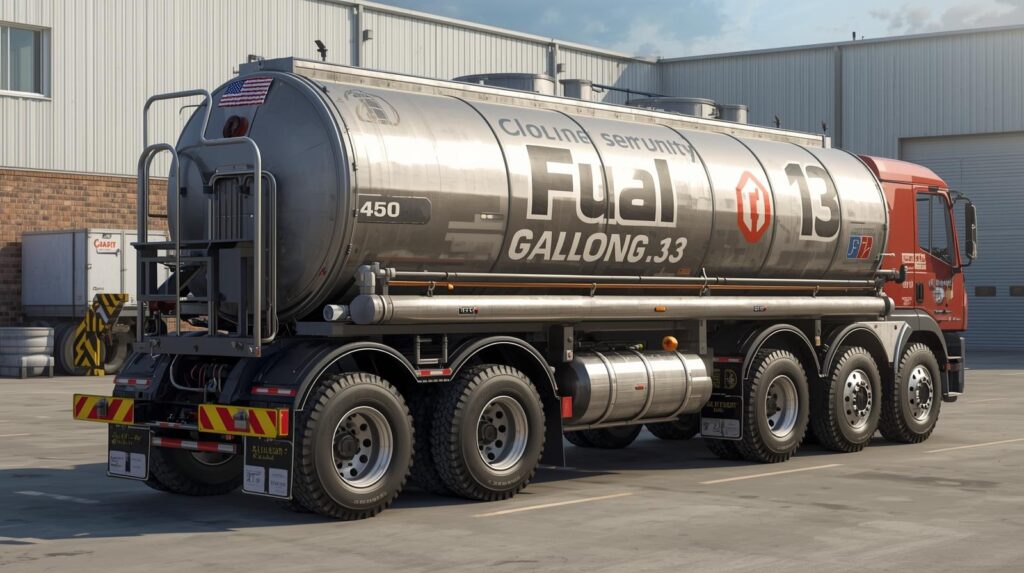
Below is a breakdown of carrying capacities vs gross volume
| Fuel Tanker Type | Capacity | Notes / Function |
| Small Delivery Tanker | 3000-gallons (2850-gallons usable) | A fuel-truck designed to carry fuel for local deliveries, ideal for tight urban routes where maneuverability matters. |
| Standard Semi-Trailer | 9000-gallons (8550-gallons usable) | Medium fuel-tanker-capacity for fuel tanker-truck operations, balancing gross-volume with transportable-capacity under the 95%-fill-rule. |
| Large Double-Trailer Tanker | 12000-gallons (11400-gallons usable) | Heavy-duty tanker-truck for long-haul transport, optimized for fuel tanker-truck capacity while following 95%-fill-rule and regulatory limits. |
From personal experience in fuel tanker-truck operations, understanding the difference between gross-volume and transportable-capacity is critical. Even though a fuel-truck may be rated for 3000-gallons or 12000-gallons, following the 95%-fill-rule ensures safe delivery, compliance, and prevents spillage during transit. Planning routes and fuel distribution requires careful consideration of fuel-tanker-capacity, vehicle type, and the specific fuel each tanker-truck is meant to carry, which I’ve learned firsthand while coordinating Standard Semi-Trailer and Large Double-Trailer Tanker operations for both urban and long-distance logistics.
Tanker Trailer Fuel Capacity: How Much Can It Carry?
| Type | Capacity / Notes |
| MC-306 / DOT-406 Trailer | Designed to Tanker truck capacity such as diesel or gasoline, typically hold 9000-11500-gallons, fuel-specific fuel-tank capacity influenced by axle-count, length, and trailers design. Usually one-compartment units carry maximum 9000-gallons safely for flammable-liquids delivery. |
| Multiple-Compartment Tanker | Tanker-truck with split-storage can carry different fuel-types or gas, hold 10000-14000-gallons, useful in food-grade or chemical-tank trailers, with interiors designed under regulation including baffle-system to reduce sloshing and overall-capacity loss. |
| Repurposed Fuel-Tankers | Older tankers used in petroleum or logistics can hold slightly less than original fuel-tanker-capacity depending on material, trailer type, and design, influencing how much fuel each fuel-tanker-truck can practically carry. |
from personal experience coordinating fuel-tanker-truck operations, the type of trailer largely determines how much fuel it can hold. While a single-compartment MC-306 is straightforward for diesel or gasoline, multiple-compartment tanker-trucks provide flexibility in fuel-logistics, allowing transport of different fuel-types in one trip. Design considerations like baffle-systems, axle-count, and length affect fuel-tanker-capacity, and understanding these nuances is key when planning trailers for repurposed or specialized deliveries. Even a small variation in material or interior can influence the overall-capacity, making precise fuel-tank calculations critical in real-world logistics.
How Much Fuel Is in a Fuel Truck at Full Capacity?
Managing filling-trucks for fuel-delivery requires careful attention to capacity, because trucks are rarely just filled to maximum-capacity without strategy. In practice, full-capacity deliveries from refineries or terminals aim to maximize fuel-truck capacity, minimize trips, and reduce risks of spilling or rollovers, but fill-loads must always be monitored against DOT-regulations, weight-limits, and safe-fuel-volumes.
The actual tanker-fuel-capacity can be affected by temperature, fuel-type, and altitude, as hot-temperatures or cold-temperatures affect fuel expansion and contraction, while higher-altitudes reduce vapor-pressure, all of which demand adjustments to fill-levels. Modern fuel-truck operations use temperature-compensated-meters, automatic-shut-off-valves, and overfill-prevention-sensors at refineries to make-sure each fuel-truck-capacity is met safely, without exceeding weight-limits or causing stress on the truck, and seasonal changes or density differences further require measurements of actual fuel-volumes in gallons to adjust fuel-truck capacity for gasoline or other fuels with high volatility, ensuring safe, compliant, and efficient fuel-delivery in bulk to terminals, stations, or industrial clients.